
How Does a Paper Soup Bowl Making Machine Support Scalable Food Packaging Production?
A Paper Soup Bowl Making Machine is an automated industrial system designed to convert paper-based raw materials into finished soup bowls suitable for hot and cold food applications. These machines are widely used in the food packaging industry, particularly by manufacturers serving quick-service restaurants, takeout chains, catering providers, and food distributors that require consistent, hygienic, and high-volume production of disposable paper bowls.
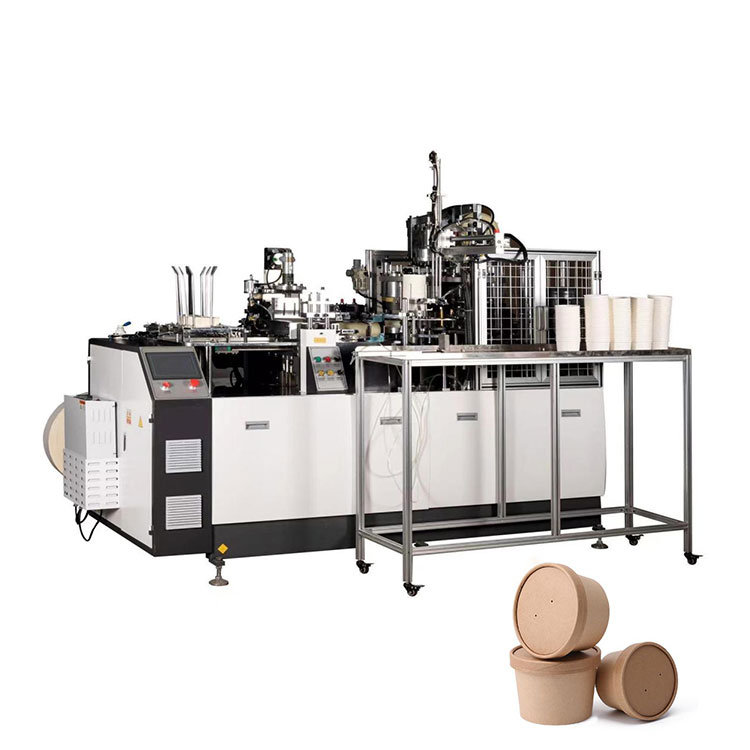
The core objective of a Paper Soup Bowl Making Machine is to integrate forming, sealing, and shaping processes into a continuous workflow that ensures dimensional accuracy, structural integrity, and compliance with food-contact standards. As global demand for paper-based food containers continues to rise, driven by changes in consumer behavior and regulatory environments, production efficiency and equipment stability have become central concerns for packaging manufacturers.
How Does a Paper Soup Bowl Making Machine Work in High-Volume Manufacturing?
A Paper Soup Bowl Making Machine typically operates through a fully automated or semi-automated process that includes paper feeding, forming, edge curling, bottom sealing, and finished product collection. The machine is engineered to maintain precise control over temperature, pressure, and forming time to ensure that each bowl meets dimensional and functional specifications.
Key Technical Parameters and Configuration
Below is a representative overview of standard parameters commonly associated with industrial-grade Paper Soup Bowl Making Machines. Actual specifications may vary depending on model configuration and customization requirements.
| Parameter | Typical Specification Range |
|---|---|
| Bowl Diameter | 90–170 mm |
| Bowl Height | 50–75 mm |
| Raw Material | Single or double PE/PLA coated paper |
| Paper Weight | 180–350 gsm |
| Production Speed | 60–90 pcs/min |
| Power Supply | 380V / 50Hz (customizable) |
| Installed Power | 6–10 kW |
| Air Consumption | 0.4–0.6 m³/min |
| Control System | PLC with touchscreen interface |
| Forming Method | Hot air or ultrasonic sealing |
| Output Mode | Automatic stacking and counting |
These parameters illustrate how the machine is designed to accommodate varying bowl sizes and material specifications while maintaining stable throughput. Precision components such as servo-driven feeding systems and programmable logic controllers help minimize material waste and reduce downtime caused by manual adjustment.
Process Integration and Quality Control
In high-volume manufacturing environments, integration with upstream and downstream equipment is essential. A Paper Soup Bowl Making Machine can be connected to paper roll slitting units, printing systems, and automated packaging lines. Sensors embedded within the machine monitor paper alignment, sealing temperature, and forming pressure in real time, enabling consistent quality control throughout extended production cycles.
From an operational perspective, the machine’s ability to maintain uniform sealing strength and bowl symmetry is critical for food safety and transportation reliability. This consistency directly impacts customer satisfaction and reduces the risk of leakage during food service use.
How Should Manufacturers Evaluate Performance and Operational Reliability?
Selecting and operating a Paper Soup Bowl Making Machine requires careful consideration of performance metrics beyond nominal speed. Manufacturers often assess machines based on long-term stability, maintenance requirements, and adaptability to changing market needs.
Common Operational Questions and Detailed Answers
Q: How does a Paper Soup Bowl Making Machine ensure food safety compliance during production?
A: Food safety compliance is achieved through the use of food-grade materials, controlled forming temperatures, and closed-loop production processes. Machines are designed to work with certified paper and coatings suitable for direct food contact. Temperature control systems ensure proper activation of coatings without burning or contamination, while enclosed forming stations reduce exposure to external pollutants. Regular cleaning protocols and modular component design further support hygiene standards required by international food packaging regulations.
Q: How can production efficiency be maintained when switching between different bowl sizes?
A: Production efficiency during size changes depends on machine design and adjustment mechanisms. Modern Paper Soup Bowl Making Machines use modular molds and quick-change tooling systems that allow operators to switch bowl diameters and heights with minimal downtime. PLC-based control panels store preset parameters for different product specifications, enabling rapid recalibration. This flexibility allows manufacturers to respond to varied customer orders without compromising output stability.
Maintenance and Lifecycle Considerations
Operational reliability is closely linked to preventive maintenance practices. Key wear components such as heating elements, forming molds, and transmission parts are typically designed for easy access and replacement. Consistent lubrication schedules, sensor calibration, and periodic inspection help extend machine service life and reduce unexpected stoppages.
Energy efficiency is another factor influencing lifecycle cost. Optimized heating systems and intelligent standby modes contribute to lower power consumption during non-peak operation, which is particularly relevant for facilities running multiple production lines.
How Is the Paper Soup Bowl Making Machine Market Evolving?
The market for Paper Soup Bowl Making Machines is evolving in response to broader shifts in food packaging and manufacturing technology. Automation, material innovation, and digitalization are influencing how machines are designed and deployed.
Manufacturers are increasingly adopting machines capable of processing biodegradable and compostable coatings, reflecting changes in packaging material preferences. At the same time, demand for higher output with reduced labor dependency is driving the integration of robotic handling and remote monitoring features. Data connectivity allows production managers to track performance metrics, schedule maintenance, and optimize output across multiple facilities.
Customization is also becoming a defining characteristic of new machine models. Adjustable forming stations and software-driven control systems enable manufacturers to produce a wider range of bowl designs without extensive mechanical modification. This adaptability supports both standardized mass production and short-run customized orders.
In this evolving landscape, equipment suppliers with strong engineering expertise and industry experience play a crucial role in supporting manufacturers’ long-term competitiveness. Yongbo Machinery has established a presence in this field by focusing on stable machine design, practical automation solutions, and ongoing technical support aligned with real-world production demands.
For manufacturers seeking detailed specifications, configuration guidance, or production planning support related to Paper Soup Bowl Making Machines, direct communication with the equipment provider is essential. To learn more about available solutions or to discuss specific project requirements, contact us Machinery through the official inquiry channels to receive tailored technical assistance and product information.
Send Inquiry



X
We use cookies to offer you a better browsing experience, analyze site traffic and personalize content. By using this site, you agree to our use of cookies.
Privacy Policy