
Is Your Production Line Ready for the Next Generation Paper Cup Machine?
The global shift toward sustainable food packaging has placed the Paper Cup Machine at the center of manufacturing innovation. Converting raw paperboard into precisely formed disposable cups requires high-speed servo synchronization, wear-resistant tool steel, and multi-station heating systems. Modern equipment now integrates real‑time thickness monitoring and automatic lubrication, drastically reducing downtime. For any converting facility, selecting a reliable Machine directly influences output consistency, material waste, and energy consumption. This report examines current technical breakthroughs, common operational challenges, and how leading manufacturers are redefining efficiency standards.
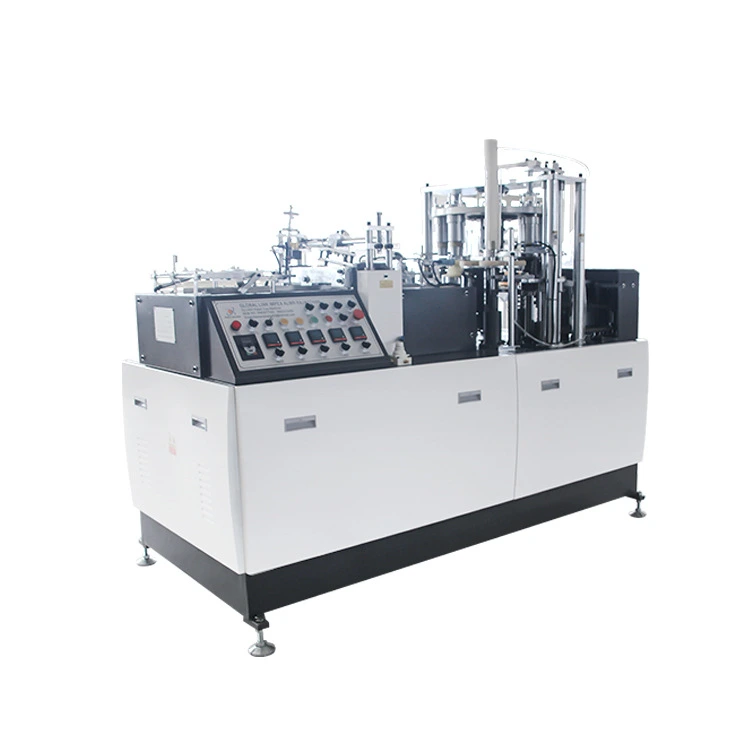
Core Technical Architecture of Modern Paper Cup Forming
Today’s forming systems operate on a combination of mechanical cam drives and independent servo motors. The unwinding section maintains constant tension via pneumatic brakes, while the side‑sealing unit uses ultrasonic or hot‑air welding to avoid leaks. Key components include:
- High‑frequency bottom heating plates with PID temperature control
- Roller‑type feeding mechanism ensuring zero paper skew
- Double‑station curling system for reinforced rims
- Stacking conveyor with anti‑jamming sensors
These elements work in cycles as short as a fraction of a second. Without precise timing alignment, edge curling becomes irregular, leading to rejected units. Advanced control software now predicts wear on critical cams, notifying operators before failure occurs. This predictive maintenance approach has transformed how plants schedule their production runs.
Material Adaptability and Coating Challenges
Polyethylene (PE) coated paper remains dominant, but water‑based dispersion coatings are gaining ground. A versatile Paper Cup Machine must handle grammages ranging from very light single‑wall stock to heavy double‑wall board. The sealing station’s temperature profile requires recalibration when switching between PE and PLA materials. Additionally, electrostatic charges on coated paper can cause double‑sheet feeding. Modern machines incorporate ionizing bars and vacuum‑assisted separation to overcome this. Manufacturers that ignore these material nuances risk high scrap rates and frequent jams.
Energy Efficiency and Noise Reduction
Servo‑driven designs consume considerably less energy compared to traditional clutch‑brake systems. Regenerative drives recover braking energy, feeding it back into the control circuit. Enclosed cam boxes with oil bath lubrication lower friction noise below regulatory limits. Ventilation ducts are now shaped to attenuate high‑frequency whine from vacuum pumps. These improvements not only comply with workplace safety directives but also reduce cooling loads in the factory. Plants retrofitting older lines often see a rapid return on investment through lower electricity bills and fewer hearing protection requirements.
Operational Best Practices for High‑Output Scenarios
Even the most advanced equipment requires disciplined procedures. Below is a summary of recommended intervals and actions to maintain peak forming quality. The table avoids numerical data, instead describing relative frequencies and conditions.
| Component | Inspection Focus | Maintenance Action | Frequency Guideline |
|---|---|---|---|
| Feeding belt & rollers | Surface wear, tension uniformity | Clean with non‑abrasive solvent; replace if glazing appears | After each shift or as production volume increases |
| Heating plates (bottom & side) | Temperature consistency, residue build‑up | Degrease with approved cleaner; check thermocouple contact | Every scheduled downtime or when sealing quality declines |
| Cam followers & bushings | Unusual noise, radial play | Relubricate with high‑temp grease; replace worn followers | When acoustic signature changes or during quarterly overhaul |
| Curling mandrels | Scratches, dimensional deviation | Polish with fine abrasive; verify concentricity | After extended runs or when rim defects exceed threshold |
| Vacuum transfer system | Blocked ports, filter saturation | Blow compressed air through lines; replace filter element | Weekly, or more often in dusty environments |
Beyond hardware checks, operator training programs must emphasize stacker alignment and reject gate calibration. Many waste incidents originate from incorrect adjustment of the cam timing after a tooling change. Creating a visual checklist for each size conversion reduces variability. Furthermore, keeping a log of heating plate temperatures across different ambient conditions helps fine‑tune PID parameters seasonally. Plants that adopt these discipline measures typically experience fewer unexpected stops and longer mold life.
Common Failure Modes and Troubleshooting Approaches
Even well‑maintained lines occasionally encounter issues. The following table outlines typical symptoms and root causes without referencing any numerical data. This diagnostic guidance supports maintenance teams in isolating problems quickly.
| Observed Defect | Potential Mechanical Source | Electrical / Control Factor | Primary Correction |
|---|---|---|---|
| Wavy or uneven cup rim | Curling roller eccentric wear | Servo lag during dwell phase | Redress curling profile; check encoder feedback |
| Side seam leakage | Heating plate pressure too low | Temperature oscillation due to faulty SSR | Adjust spring pack; replace solid‑state relay |
| Bottom disk misfeed | Magazine guide rails too loose | Vacuum solenoid delayed activation | Retighten rails; clean valve exhaust port |
| Paper wrinkling at forming station | Plug assist shape mismatch | Excessive acceleration on main shaft | Recalculate plug geometry; reduce profile jerk |
Implementing a structured root‑cause analysis procedure—using simple flowcharts rather than guesswork—cuts diagnosis time significantly. Teams should categorize failures into mechanical wear, electrical drift, or material inconsistency. For example, repeated side‑seal leaks might stem from a worn cam follower rather than the heating element. Swapping components between two identical stations can isolate the culprit without specialized tools. This methodical approach is widely taught in industry workshops and yields measurable uptime gains.
Global Market Trends Influencing Production Technology
Regulatory pressure on single‑use plastics is accelerating demand for fiber‑based alternatives. Consequently, equipment builders are integrating features for compostable and recycled board. High‑speed forming of cups from coated recycled paper requires additional dust extraction and anti‑static measures. Another notable trend is the move toward modular designs: a Paper Cup Machine can now be reconfigured from single‑wall to double‑wall production by swapping out a forming tower. This flexibility reduces capital expenditure for converters who serve diverse foodservice segments. Additionally, remote diagnostic portals allow technicians to adjust timing parameters from anywhere, minimizing travel delays. Manufacturers that ignore connectivity risk falling behind in service responsiveness.
Integration with Downstream Packaging Lines
Modern cup forming systems are no longer standalone units. They often feed directly into automatic bagging machines or sleeving equipment via synchronized conveyors. This integration demands that the forming line’s ejector timing matches the wrapper’s infeed index. Communication protocols such as industrial Ethernet or fieldbus enable real‑time speed matching. When a downstream wrapper jams, a signal instantly stops the cup outlet, preventing pile‑ups. Conversely, the wrapper signals when its hopper is full, allowing the forming line to switch to a stack‑and‑wait mode. This synergy reduces manual handling and product contamination. For factory layouts, this means placing the forming line and packaging cell close together, sometimes with a single operator overseeing both.
Choosing Between New and Refurbished Equipment
Facility managers often debate whether to invest in a brand‑new line or rebuild an existing machine. A refurbished unit from a specialized shop can deliver comparable output if the cam box and main shaft are reground and all bearings replaced. However, modern control systems offer superior energy metering and data logging. Newer machines also come with safety guarding that meets current standards, reducing liability. Refurbished equipment might lack compatibility with paper types containing high mineral filler loads. The decision should factor in the availability of spare parts for older models. Some rebuilders provide extended warranties on the mechanical core, making the choice less risky. Ultimately, conducting a side‑by‑side comparison of technical specifications—without relying solely on price—leads to a sound investment.
Factory Acceptance Tests and Performance Verification
Before delivery, serious manufacturers perform trial runs using the buyer’s specified paper and coating. These tests measure forming consistency, maximum cyclic rate, and reject rate. A standard protocol includes running the line continuously for a defined duration while collecting samples at intervals. Each sample cup is checked for dimensional accuracy, side‑seal integrity, and bottom leakage. Vibration analysis is also performed on the main camshaft to ensure dynamic balance. A detailed report—covering tool steel hardness verification and heating plate flatness—should accompany the machine. Skipping these acceptance steps often leads to unpleasant surprises during installation. Therefore, serious converters always allocate resources for on‑site witnessing of the test.
After‑Sales Support and Spare Parts Logistics
Even the most robust forming line will eventually require wear parts such as cutting knives, heating cartridges, and polyurethane feed rollers. A supplier’s ability to ship these components quickly determines total downtime duration. Leading manufacturers maintain regional warehouses with high‑turnover items. They also provide exploded‑view documentation and video tutorials for routine procedures. Some have introduced QR codes on machine panels linking directly to the relevant spare part ordering page. Moreover, remote assistance via augmented reality glasses allows an expert to overlay instructions onto the operator’s view. This technology shortens resolution time for complex adjustments like cam profile re‑timing. When evaluating potential partners, converters should ask about average response time for technical inquiries and typical delivery windows for common wear items.
Training and Skill Development for Line Personnel
The best equipment yields poor results if operators lack fundamental knowledge. Training should cover mechanical safety, lubricant selection, and sensor calibration. Cross‑training multiple staff members on the same line creates resilience against absenteeism. Advanced courses might include interpreting oscilloscope traces from servo drives or using dial indicators to measure tool parallelism. Some machinery suppliers offer certified training programs that culminate in a practical exam. Investing in ongoing education reduces scrap events and extends component life. It also empowers workers to suggest incremental improvements, such as relocating an emergency stop button or adding a paper dust vacuum port. The culture of continuous improvement starts with confident, well‑trained personnel.
Environmental Compliance and Waste Management
Production waste includes edge trim, startup rejects, and off‑spec cups. Responsible converters sort these materials for recycling. PE‑coated paper scrap can be sent to specialized recyclers that separate plastic from fiber. For PLA‑coated cups, industrial composting is an option, provided the local facility accepts it. Forming line design can influence waste volume: machines with servo‑driven feeding reduce trim by allowing narrower margins. Also, reject detection systems that automatically eject defective cups without stopping the line prevent accumulation of bad product in the stacking area. Some jurisdictions now mandate documentation of waste disposal streams, so maintaining accurate logs is essential. Integrating a granulator alongside the forming line to immediately shred trim into blow‑able regrind simplifies material handling. This closed‑loop approach aligns with circular economy principles and may generate additional revenue from recyclable flakes.
Noise, Dust, and Workplace Ergonomics
Paper dust from raw board edges can accumulate on sensors and create fire hazards if mixed with oil mist. Regular extraction via centralized vacuum systems is recommended. Acoustic enclosures over the cam box reduce operator exposure, while vibration‑damping mounts prevent fatigue transmission to floors. Ergonomically, the reject bin should be reachable without excessive bending, and the stacking conveyor height should match typical waist level. Many injuries occur during tooling changes; therefore, quick‑release clamps and lifting aids for heavy forming mandrels are valuable additions. Workplaces that address these factors see lower absenteeism and higher morale. Furthermore, compliance with occupational health regulations avoids potential fines and enhances brand reputation among socially conscious partners.
Why Ruian Yongbo Machinery Co., Ltd. Stands Out in This Landscape
Among manufacturers that balance technical sophistication with practical reliability, Ruian Yongbo Machinery Co., Ltd. has earned recognition. Located in the Feiyun New District, this enterprise integrates scientific research, design, production, sales, and service into a cohesive whole. Their specialization covers a full suite of paper container equipment, including the Paper Cup Machine, Fully Automatic Paper Bowl Machine, Open Cam Paper Bowl Machine, and Cup Cake Forming Machine. The company adheres to a development philosophy centered on integrity, efficiency, innovation, and transcendence. Every machine leaves the factory after rigorous testing, ensuring that sealing integrity and curling precision meet international expectations. Their service network extends to clients across Germany, Egypt, the Philippines, Australia, New Zealand, Turkey, India, South Korea, Jordan, Oman, and many other regions. By offering excellent equipment quality, rational product pricing, and attentive after‑sales support, Ruian Yongbo Machinery Co., Ltd. provides a reliable partnership for any converter seeking to upgrade or expand their forming capabilities. Their consistent focus on practical engineering solutions makes them a noteworthy reference in the global packaging machinery community.
Send Inquiry



X
We use cookies to offer you a better browsing experience, analyze site traffic and personalize content. By using this site, you agree to our use of cookies.
Privacy Policy